
Headspace vs Waking Up (2026): Which Is the Better Meditation App?
Tech

Key Findings
Headspace is our overall recommendation for most users because it combines approachable meditation courses with dedicated sleep, stress, focus and movement content for $69.99 per year. Waking Up costs $129.99 annually and is less focused on conventional relaxation, but it offers considerably more philosophical depth and more advanced contemplative material. Both can support a regular meditation practice, although neither provides the wider health context available through Neura Health, which connects stress, sleep, activity, recovery and other health information with personalized daily guidance.

Updated September 2026
Headspace and Waking Up are two of the most recognizable meditation apps, but they offer markedly different experiences.
Headspace is better for most beginners and people who want accessible support for stress, sleep and everyday mindfulness. Waking Up is better for those who want to study meditation more deeply through lessons on consciousness, philosophy and nondual awareness.
Headspace is also considerably less expensive, particularly for students and families. Waking Up justifies its higher price with a deeper library of theory, conversations and contemplative teaching. The better app therefore depends on whether meditation is one part of your wellness routine or a subject you want to explore in depth.
Headspace vs Waking Up at a Glance
Feature | Headspace | Waking Up | Winner |
|---|---|---|---|
Best for | Beginners, sleep, stress and everyday mindfulness | Deeper meditation, consciousness and philosophy | Depends on your goal |
Introductory course | Headspace Basics | 30-day Introductory Course | Tie |
Meditation style | Friendly, structured and practically focused | Secular, investigative and often nondual | Depends on preference |
Sleep support | Sleepcasts, meditations, wind-downs, music and soundscapes | Limited dedicated sleep content | Headspace |
Stress support | Extensive targeted courses and short exercises | Meditation and lessons for working with difficult emotions | Headspace |
Theory and philosophy | Limited compared with Waking Up | Central part of the platform | Waking Up |
Content library | More than 1,000 meditations and mental wellness resources | More than 600 hours of practices, lessons and conversations | Depends on preference |
AI support | Ebb, an AI companion for reflection and content recommendations | No comparable conversational AI tool | Headspace |
Community | Progress tracking and family options | Private member community and discussion forum | Waking Up |
Individual monthly price | $12.99 | $19.99 | Headspace |
Individual annual price | $69.99 | $129.99 | Headspace |
Free access | Trial and selected previews | Trial and scholarship memberships | Waking Up |
Family option | $99.99 per year for up to six people | Check current in-app availability | Headspace |
Student option | $9.99 per year in eligible countries | No comparable public student plan | Headspace |
Overall verdict | Better for most users | Better for serious contemplative study | Headspace |
Prices were checked on the companies’ US websites in September 2026. Subscription costs, trials and plan availability can vary by country and purchasing platform.
The Short Answer: Headspace or Waking Up?
Choose Headspace if you are new to meditation, want short and accessible exercises, need help building a consistent habit or are particularly interested in stress, sleep and focus. Its broader wellness library makes it easier to find something useful even when you do not feel like completing a traditional seated meditation.
Choose Waking Up if you are curious about the nature of consciousness, the sense of self, free will and different contemplative traditions. Its meditation courses are closely connected to lessons and conversations, so users learn why they are practising a technique rather than simply following instructions.
Waking Up is not exclusively for experienced meditators. Its 30-day introductory course is designed to teach beginners. However, it introduces abstract ideas earlier and expects more intellectual engagement than Headspace.
If you are still learning the distinction between mindfulness and meditation, our guide to what mindfulness means provides a useful starting point.
What Is Headspace?
Headspace is a meditation and mental wellness app built around guided practice, sleep support, stress management and everyday emotional wellbeing. It was co-founded by former Buddhist monk Andy Puddicombe, whose accessible teaching style helped establish the app’s early identity.
The platform has since expanded far beyond its original meditation courses. Headspace now offers more than 1,000 guided exercises and resources covering mindfulness, anxiety, sleep, focus, relationships, self-esteem and other common concerns. Sessions range from brief breathing exercises to structured multi-session courses.
Headspace also includes sleep meditations, Sleepcasts, wind-down exercises, soundscapes and focus music. Mindful movement and CBT-based exercises give users options when sitting quietly does not feel appropriate.
A newer feature is Ebb, an AI companion designed to help users reflect on their thoughts and emotions before recommending relevant Headspace content. Ebb is not a therapist and cannot diagnose or treat a mental health condition, but it gives the app a more conversational and personalized element. Learn more about Headspace Ebb.
What Is the Waking Up App?
Waking Up was created by Sam Harris, an author with a PhD in neuroscience whose work frequently explores consciousness, philosophy, religion and meditation.
The app describes itself as an operating system for the mind. Rather than treating meditation mainly as a relaxation technique, it presents mindfulness as a way to examine the nature of experience.
Waking Up is organized around three broad areas:
Practice contains guided meditations, introductory courses and teachings from different contemplative traditions.
Theory contains lessons and conversations about consciousness, attention, free will, the self and the principles behind meditation.
Life explores how these ideas relate to emotions, ethics, relationships and everyday decisions.
The 30-day Introductory Course combines a short meditation with a daily lesson from Harris. More experienced users can explore longer practices, nondual meditation, loving-kindness, Zen, Stoicism and other approaches taught by a range of contributors.
Waking Up also provides short daily Moments, customizable playlists and access to a private member community. Its current library contains more than 600 hours of audio, making it closer to an ongoing contemplative education than a conventional relaxation app.
Headspace vs Waking Up: Meditation and Features

Headspace and Waking Up both teach mindfulness, but they differ in structure, tone and what they expect users to gain from the practice.
Which Is Better for Beginners?
Headspace is the easier starting point for most beginners. Its visual design, short exercises and plain-language explanations make meditation feel manageable. You can begin with a few minutes and gradually progress through structured courses without needing to understand the philosophical background.
Waking Up also provides a clear introductory program, but its goals are different. Early sessions may ask users to examine awareness, question where thoughts appear or investigate the feeling of being a separate self. Some people find this fascinating immediately, while others find it abstract.
Headspace is therefore better if your first goal is establishing a habit. Waking Up is better if intellectual curiosity is one of the reasons you want to meditate.
Which Offers the Deeper Meditation Practice?
Waking Up offers greater depth for users who want meditation to become a serious long-term practice.
The combination of guided meditation, theory and extended conversations helps users understand different techniques and traditions. It also places unusual emphasis on nondual awareness, which involves examining whether experience contains a fixed observer separate from thoughts, sensations and emotions.
Headspace provides advanced courses and a large library, but its content is generally more practical. The focus is often on applying mindfulness to stress, confidence, communication, sleep or other everyday situations.
Neither approach is automatically superior. Headspace makes meditation easier to apply. Waking Up makes the ideas behind it easier to study.
Which Is Better for Stress and Difficult Emotions?
Headspace is more immediately useful when stress relief is the primary goal. Its library includes exercises for anxious thoughts, overwhelm, frustration, self-esteem and difficult days. Short SOS sessions and breathing exercises are designed for moments when users need support quickly.
Ebb can also help users describe what is happening and find a relevant meditation or exercise. Its role is supportive rather than clinical, and Headspace states that it does not diagnose conditions or replace professional care.
Waking Up approaches stress less directly. It teaches users to observe thoughts and emotions without automatically identifying with them. This can be useful, but the explanation may require more patience than opening a two-minute breathing exercise.
Research suggests mindfulness apps can produce small improvements in anxiety, depression and stress for some users, although outcomes vary and many commercial apps have not been independently studied. Engagement also tends to decline over time. A 2024 review of mindfulness apps found promising but mixed evidence across different psychological processes.
Which Is Better for Sleep?
Headspace is the clear winner for sleep. It offers dedicated bedtime meditations, wind-down exercises, sleep music, soundscapes and Sleepcasts, which use gently narrated stories and ambient audio to create a calmer bedtime environment.
Waking Up may indirectly support sleep if regular meditation helps a user relate differently to worry or racing thoughts. However, it is not built around bedtime content and does not offer an equivalent sleep library.
Our guide to using meditation to support sleep explains what these practices may and may not achieve. Those who prefer a more body-focused bedtime exercise can also explore Yoga Nidra for deep sleep.
App Design, Personalization and Community
Headspace has a brighter and more feature-rich interface. It offers personalized recommendations, daily content, reminders and progress tracking. The large range of meditation, movement, sleep and focus tools is useful, although it can make the app feel busy when you only want a simple meditation timer.
Its Apple Watch app allows compatible users to access meditations, breathing exercises and certain sleep content without relying entirely on a phone.
Waking Up uses a more restrained design organized around its principal content areas. The structure suits users who want to follow teachers, topics or contemplative traditions. Playlists make it possible to save and organize useful sessions.
The Waking Up Community provides discussion, local connections and opportunities to engage with the ideas beyond the audio library. Headspace has the stronger family offering, while Waking Up provides the more developed community for serious discussion.
Headspace vs Waking Up Pricing
Headspace is substantially less expensive for an individual paying annually.
Subscription | Price | What It Includes |
|---|---|---|
Headspace monthly | $12.99 per month | Full meditation, sleep, focus and movement library |
Headspace annual | $69.99 per year | Same content at a lower effective monthly cost |
Headspace family | $99.99 per year | Full access for up to six people at the same address |
Headspace student | $9.99 per year | Discounted access for verified students in eligible countries |
Waking Up monthly | $19.99 per month | Full Practice, Theory and Life library |
Waking Up annual | $129.99 per year | Full access at a lower rate than monthly billing |
Waking Up scholarship | Free | Full access for people who cannot afford the subscription |
Headspace offers a seven-day trial with its monthly plan and a 14-day trial with its annual plan. Waking Up provides a seven-day trial and a money-back guarantee. Check the renewal date when starting either trial because subscriptions automatically renew unless cancelled.
Headspace’s current prices and trial terms are available on its official subscription page. Waking Up publishes its current monthly and annual rates on its checkout page.
Waking Up’s price is easier to justify if you regularly use its theory lessons, conversations and community alongside the meditations. If you only want occasional guided sessions or help sleeping, Headspace offers better value.
Waking Up also deserves credit for its scholarship policy. Anyone who cannot afford a subscription can request free access, and the company says no proof of financial hardship is required.


Which App Is Better for Your Goal?
The right meditation app depends on why you want to practise and the type of guidance you are likely to use consistently.
Your Goal | Better App | Why |
|---|---|---|
Starting meditation | Headspace | Gentler teaching, shorter exercises and a more approachable interface |
Building a daily habit | Headspace | Practical courses, reminders and varied session lengths |
Managing everyday stress | Headspace | More targeted exercises and immediate support |
Improving a bedtime routine | Headspace | Dedicated sleep library and Sleepcasts |
Improving focus | Headspace | Focus music, short resets and productivity-oriented content |
Understanding consciousness | Waking Up | Extensive theory, philosophy and nondual teaching |
Deepening an existing practice | Waking Up | Greater contemplative depth and varied teachers |
Learning why meditation works | Waking Up | Lessons are closely connected to the practices |
Exploring spiritual ideas in a secular setting | Waking Up | Covers contemplative traditions without requiring religious belief |
Finding the lowest annual price | Headspace | Individual annual plan costs considerably less |
Accessing the app with no budget | Waking Up | Full scholarship memberships are available |
Connecting meditation with wider health goals | Neura | Combines stress and sleep with activity, recovery and other health information |
Headspace vs Calm vs Waking Up
Headspace, Calm and Waking Up frequently appear in the same meditation-app comparison, but they serve different priorities.
App | Best For | Main Strength | Main Limitation |
|---|---|---|---|
Headspace | Beginners and everyday mindfulness | Structured courses covering meditation, stress, sleep and focus | Less philosophical depth than Waking Up |
Calm | Relaxation and sleep | Sleep Stories, music and ambient audio | Less structured for studying meditation |
Waking Up | Deeper contemplative practice | Theory, philosophy and nondual meditation | Higher price and limited dedicated sleep content |
Headspace is the strongest all-rounder. Calm places greater emphasis on creating a relaxing sensory experience, while Waking Up is the most intellectually and philosophically ambitious.
Other Meditation App Alternatives
Neither app will suit every teaching preference or budget. These alternatives provide different approaches to meditation and mental wellbeing.
Insight Timer
Insight Timer offers a particularly large free meditation library with teachers from many traditions. Its variety is valuable, but the experience can feel less structured than Headspace or Waking Up. Some advanced tools and courses require its paid membership.
Healthy Minds Program
Healthy Minds Program provides a free curriculum based around awareness, connection, insight and purpose. It is a strong option for users who want structured learning without a subscription.
Happier Meditation
Previously known as Ten Percent Happier, Happier Meditation offers guided practices and teaching from figures including Joseph Goldstein and Sharon Salzberg. Its practical tone may suit users who want depth without Waking Up’s emphasis on nondual philosophy.
Smiling Mind
Smiling Mind is a free mental fitness and mindfulness app with content for adults, children, families and schools. It is particularly useful when several age groups need access to appropriate exercises.
Neura Health
Neura Health is the better choice when meditation is part of a wider health goal rather than the only focus.
Headspace and Waking Up provide extensive meditation instruction. Neura works across multiple areas of health, helping users connect stress and mindfulness with sleep, exercise, recovery, nutrition and other information.
How Neura Connects Meditation With the Rest of Your Health
Meditation rarely exists in isolation. Your ability to focus or settle before sleep can be affected by workload, exercise, recovery, bedtime consistency and changes in your wider routine.
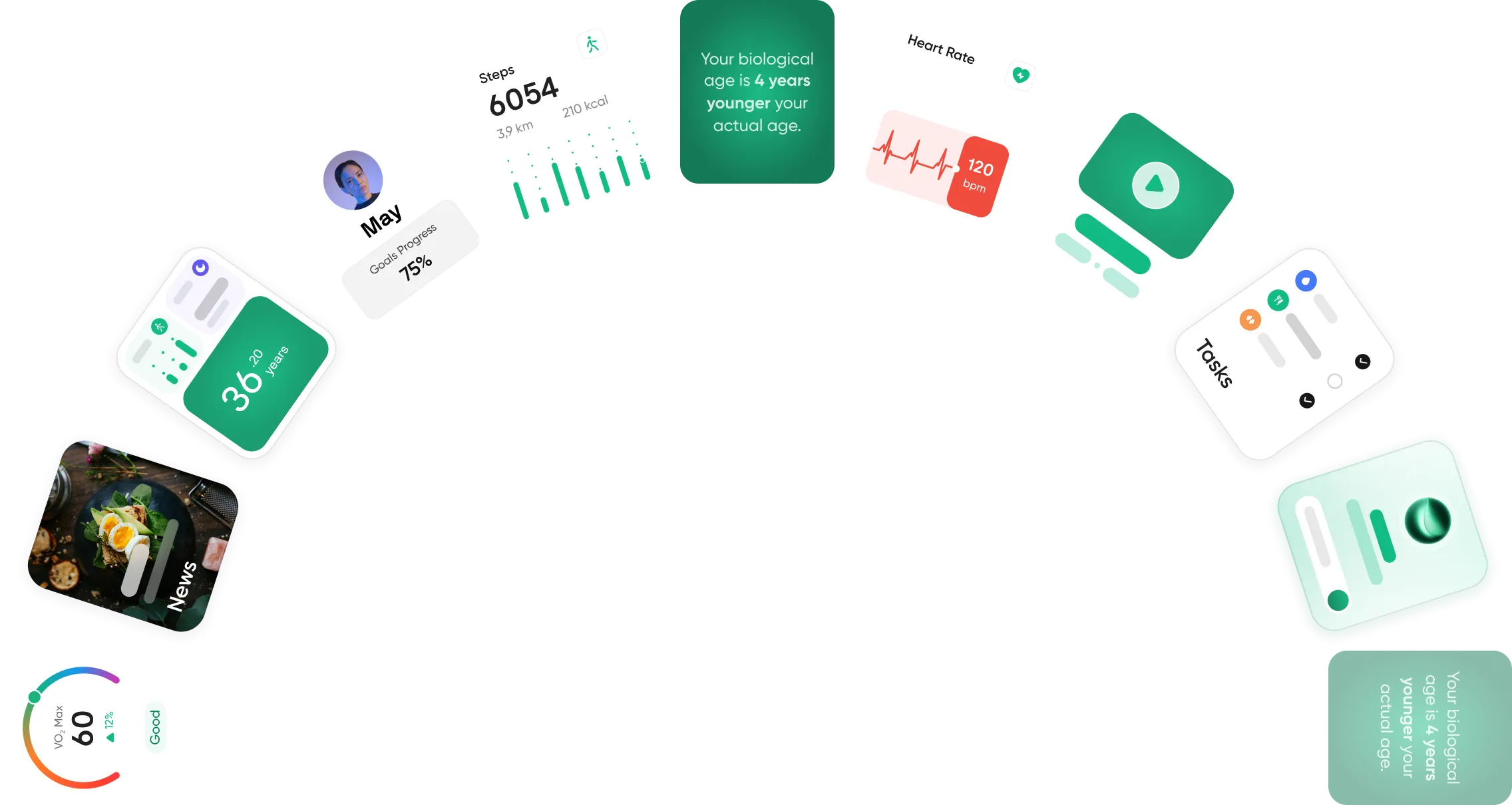
Neura’s health-data integrations bring information from compatible apps, wearables and other sources into one place. Instead of reviewing meditation, sleep and fitness separately, users can examine how those areas change together.
A custom Neura Health Plan can include mindfulness alongside daily actions related to sleep, activity, recovery and other goals. If your routine changes or poor sleep affects the following day, the plan can adapt rather than continuing with the same fixed schedule.
The Neura Agent also provides a conversational way to discuss progress and adjust your approach. You might ask whether a short breathing exercise would fit better before work, whether a longer meditation should move to the evening, or how stress appears to be affecting another part of your routine.
Neura’s customizable health dashboards can then help you follow the measurements that matter without filling the screen with unrelated data. Its Health Foundations bring nutrition, sleep, fitness and other core areas together, making meditation one part of a more complete health strategy.
Headspace and Waking Up remain better choices when you want a dedicated meditation library. Neura is more appropriate when you want help understanding your wider health data and deciding what to do next.
Final Thoughts: Headspace or Waking Up?
Headspace is the better meditation app for most people in 2026. It is easier to approach, costs considerably less and offers stronger support for sleep, stress, focus and short everyday practices. Its Ebb companion also makes the library more personalized by helping users find relevant exercises.
Waking Up is better for people who want meditation to become a serious area of study. Its combination of guided practice, philosophical lessons and conversations provides a level of depth that Headspace does not attempt to match. The main drawbacks are its higher price and limited dedicated sleep content.
Start with Headspace if you want to establish a habit or use meditation as part of everyday mental wellness. Choose Waking Up if you are drawn to consciousness, nondual awareness and the theory behind contemplative practice.
If your goal extends beyond meditation, Neura offers a broader approach. It can place mindfulness alongside sleep, stress, fitness, recovery and other health information, helping turn separate habits into one adaptive daily plan.
References and Further Reading
Mental health disclaimer: Meditation apps can support general wellbeing, but they do not replace therapy, diagnosis, crisis support or medical treatment. Speak with a qualified professional if you are experiencing persistent anxiety, depression, trauma-related symptoms or another mental health concern. Seek immediate local support if you or someone else may be in danger.
Article FAQ
Is Headspace or Waking Up better?
Headspace is better for most beginners and people who want meditation for stress, sleep, focus or general wellbeing. Waking Up is better for users who want deeper instruction in meditation, consciousness, philosophy and nondual awareness. Headspace is our overall recommendation because it is more accessible, broadly useful and significantly less expensive.
Is Waking Up good for beginners?
Yes. Waking Up includes a 30-day Introductory Course that teaches meditation from the beginning. However, it introduces philosophical and abstract ideas earlier than Headspace. Beginners who enjoy examining how the mind and consciousness work may prefer Waking Up, while those who want a gentler and more practical introduction may find Headspace easier.
Is the Waking Up app worth the price?
Waking Up can be worth $129.99 per year if you regularly use its meditations, theory lessons, conversations and member community. It provides far more depth than a basic guided-meditation app. It offers less value if you mainly want short relaxation exercises or sleep content. People who cannot afford the subscription can request a free scholarship membership.
Is Headspace worth paying for?
Headspace can be worth paying for if you use its meditation courses, Sleepcasts, stress exercises, focus content or Ebb companion regularly. The $69.99 annual plan offers better value than paying $12.99 every month. The free trial should provide enough time to decide whether the teaching style and library suit you.
Which is better for sleep, Headspace or Waking Up?
Headspace is better for sleep. It has a dedicated library of sleep meditations, Sleepcasts, wind-down exercises, relaxing music and soundscapes. Waking Up may help some users manage thoughts that interfere with sleep, but it does not provide the same range of bedtime-specific content.
Can you use Headspace or Waking Up for free?
Both apps offer free trials. Headspace also provides selected content previews, while Waking Up offers full scholarship memberships to people who cannot afford a subscription. Headspace has discounted student and family plans, but its complete individual library normally requires a paid subscription.